Experiencing the Namibian Literary Scene: Five Books to Explore

For #ReadingAfrica 2026, we’ve invited several writers to share guest posts featuring their “5 Must-Reads” from a specific region of Africa. Feel free to join us over on social media for the weeklong celebration of African writing in all its forms.
By Roxane Bayer
The literary scene in Africa is thriving and busy, and southern Africa is not excluded from the conversation, especially not Namibia.
Both the reading and writing communities are constantly growing, as can be seen from the prominent rise in book clubs, reading parties, book launches, author discussions, and, most important perhaps, literary festivals. Namibia is now home to the National Literary Festival of Namibia as well as the Doek Literary Festivals.
Southern African writers are claiming spaces in international anthologies and forming writing circles among themselves. They are winning local and international writing awards.
Here are five recommendations to experience what the region, and Namibia specifically, has to offer.
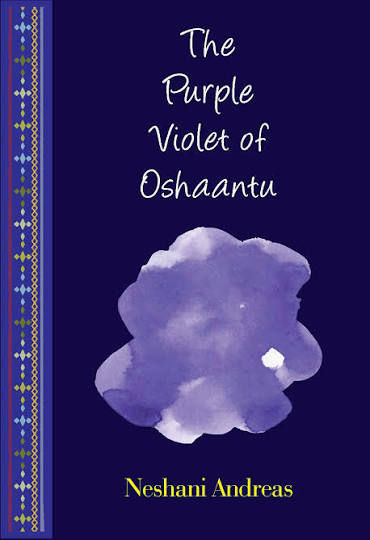
Title: The Purple Violet of Oshaantu
Author: Neshani Andreas
Publisher: Heinemann Buy here.
The Purple Violet of Oshaantu is a quintessential piece of Namibian literature.
Set in a rural village in northern Namibia, the novel tells the story of two women and celebrates the friendships they have formed living under the gruelling pressures of the patriarchy.
Told from the perspective of her best friend Mee Ali, The Purple Violet of Oshaantu is the story of Kauna’s loveless marriage with an abusive husband. Mee Ali has a secure marriage with her loving husband Michael, while Kauna endures violence from hers. When he dies suddenly, the villagers are quick to suspect Kauna.
The Purple Violet of Oshaantu serves as a criticism of specific elements of society and a condemnation of gender-based violence, which remains rampant in Namibia today. It is also a commentary on how widows are often treated. But above all, it is a story of sisterhood in a traditional Namibian society.
“I wanted to run towards all those women, and hug and kiss them all. I wished the spirit would last forever among us. Although this okakungungu lasted just one day, a feeling of sisterhood and communal responsibility enveloped us in a strange and cheerful sense of oneness. I felt connected to these women, these sisters, these mothers, these aunts, and grandmothers. As we parted, I looked at them and thought, Yes, girls, you have done it again.”
Andreas’ novel remains pivotal to post-independence Namibian literature and a recognition of womanhood.

Title: Only Stars Know the Meaning of Space: A Literary Mixtape
Author: Rémy Ngamije
Publisher: Gallery/Scout Press
Only Stars Know the Meaning of Space is not nearly as straightforward a collection as one might expect it to be. As the name suggests, it is a literary mixtape, with both a side A and side B. Side A consists of one cohesive narrative where we follow an aspiring writer in a complicated world just before turning 30 and in mourning after losing his mother.
A stand-out story in the collection is one told as a simple grocery list, "Crunchy, Green Apples (or Omo)", where this unnamed character explores his grief.
“Her passing was like ripping North from a compass face. The needle of your life spun around recklessly.”
The B-side, on the other hand, consists of seemingly independent stories where we follow a variety of characters, from a group of homeless Windhoekers trying to scavenge enough to survive to an account of the Border War told through a localised military alphabet.
Together, these two sides form a cohesive short story collection of complicated human relationships and intergenerational experiences.
Several of the stories in this collection have received critical acclaim, from being shortlisted for the Caine Prize ("The Neighbourhood Watch" and "The Giver of Nicknames"), to winning the Commonwealth Short Story Prize for the African region ("Granddaughter of the Octopus").

Title: Love and Fury: A Memoir
Author: Margie Orford
Publisher: Jonathan Ball
Love and Fury remains one of the most impactful and passionate memoirs I have read. Renowned South African crime writer and journalist Margie Orford, through a story filled with rage and love, writes about marriage, divorce, depression, loss, sexual assault, as well as being a mother, wife, woman, and writer.
She tells us how her experiences have influenced both her life and her writing, which often explores the violence women endure at the hands of men and the patriarchy.
Love and Fury is told through six chapters, each covering a section of Orford’s life: born in London, raised in Namibia, educated in New York, working in South Africa, and now living in London. Her chapter on South Africa talks of the research Orford did at the Rape Crisis Cape Town Trust, which ultimately led to her first crime novel Like Clockwork.
Unsurprisingly, one of the most significant chapters to me is the one covering her time in Namibia, not only because it tells the story of a familiar place, but because it tells the story of the early Namibian publishing industry. After reading a profile on Jane Katjavivi, the founder of independent publisher New Namibia Books, Orford became involved in the Namibian publishing industry in 1994. About a year later, New Namibia Books published an anthology, Coming on Strong: Writing by Namibian Women, edited by Orford and Nepeti Nicanor and featuring essays, poetry and short fiction about the experiences of women in post-independence Namibia—written by Namibian women.
Love and Fury is brutally honest and traumatic. At the same time, it is vulnerable, observant, and healing. It’s a book for mothers, daughters, and writers.

Title: Now Now: The 2023 Doek Anthology
Author: Multiple, edited by Rémy Ngamije
Publisher: Doek Arts Trust More info here.
Now Now is a lively and diverse collection consisting of eight stories by emerging literary voices from Namibia, alongside four pieces from Eswatini, South Africa, Zambia, and Zimbabwe. This anthology serves as a voice for these storytellers and their peers while ensuring that the future generation of Namibian readers and writers have access to local literature.
From two lovers considering the state of their relationship in the Namib Desert to surviving in a post-apocalyptic Windhoek, Now Now was curated and edited with much care. It explores different narrative styles, different communities, and different experiences.
The anthology, created through support from the University of East Anglia’s International Chair of Creative Writing, is a significant milestone in Namibian literature, having given many writers their first in-print publication

Title: Mukwahepo: Woman Soldier Mother
Author: Ellen Namhila
Publisher: Unam Press
Female voices are often forgotten when it comes to stories of war and the liberation struggle, which is why the existence of Mukwahepo is so important. It's a chapter of both Namibian and African history.
Told through interviews to author Ellen Namhila, the book follows the life of Aguste ‘Mukwahepo’ ya Immanuel. In 1963, Mukwahepo left her home in Namibia to follow her fiance across the border to Angola, surviving hunger and war. They eventually made their way to Tanzania, where Mukwahepo became the first woman to join the People's Liberation Army of Namibia.
“They called me Mukwahepo to tease me because of my situation – a woman alone in a military training camp; a woman among men in the liberation struggle movement,” she says.
Her life was never easy, having been forced to marry a much older man when she was only 17, returning to an independent Namibia but with her loved ones deceased, and never having had the children she had always desired.
“I too had my fair share of dreams, but none of them came true.”
Yet Mukwahepo remained a guiding light in her community and to those who knew her.
When she died in 2018, the late President Hage Geingob said at her funeral: “Our dear comrade Mukwahepo understood that for Namibians to live as free and independent people, they had to be willing to die for that independence."
Most impressive about the books is how the author allowed Mukwahepo to tell her own story of who she was and what she did. One can only be thankful that this part of Namibian history has been recorded and preserved.


Comments