From Womb City to Zoo City: Exploring Afrofuturistic and Science-Fiction Stories

For #ReadingAfrica 2025, we have asked a few writers to write guest posts, recommending books from different genres. Feel free to join us over on social media for the weeklong celebration of African writing in all its forms.
By Alex J. Coyne
A lot of things have been written about the African continent, though the most famous “African” stories most people recall are fictional accounts of past trials and tribulations – often told from an outsider’s or explorer’s perspective, and doesn’t always relate to personal experiences or stories of Africa [/not always grounded in personal African experiences].
Modern Africa has electric cars, bustling cities, virtual reality, and artificial intelligence. The future is potentially exciting, and the future is simultaneously uncertain – and therein lies much storytelling potential for writers. Afrofuturistic and science-fiction stories explore the various paths Africa could take in the future.
Though stories and plots are dressed up as fictional and set in creatively imagined futures, Afrofuturistic stories are also vehicles that are often used to explore various modern issues affecting the continent: poverty, corruption, politics, and human relationships.
What could happen? What can happen? What might happen?
While the future feels uncertain and open to speculation, authors like Tlotlo Tsamaase and Nnedi Okorafor use Afrofuturism to tell truly human stories and uniquely African cultural, futuristic tales. These stories are filled with cultural references and Africcanness, but also filled with references to modern pop culture.
Afrofuturism blends advantages like instant connectivity and pizza delivery contrasted against evils like violence, poverty, and corruption.
Here’s our recommendations for the best Afrofuturistic and science fiction stories.

Womb City (Tlotlo Tsamaase)
Title: Womb City
Author: Tlotlo Tsamaase
Publisher: Jacana Media
Tlolo Tsamaase’s novel Womb City is a story in future-set Gabarone, Botswana.
The title “Womb City” is a reference to a dystopian future where people have the ability to transfer their consciousness into another body.
Jumping into another body is a sure way to get an extended lifespan. However, the drawback is having your every action closely monitored by a police state. In Womb City, artificial intelligence is employed to assess people for their potential criminality – yes, even if they haven’t done anything yet.
Naturally, the book explores the value of money and abuses of power that comes with it. Money talks in the fictional metropolis of Womb City, and corruption is rife. Citizens with cash can find easier, sometimes faster or illegal ways of getting into another body.
At the heart of the story is Nelah, who is unhappily married to the law enforcement official Elifas, though committed to the birth of her daughter who is being grown within the Matieng Fertility Centre, and being billed on a monthly plan much like a Netflix subscription.
She seeks out an affair with the rich and powerful Janith Koshal, and her life is soon turned upside down when they kill someone in a hit-and-run accident. How do they hide the body when artificial intelligence has practically already predicted the corpse?
Womb City reminds one of African-bound authors like Bessie Head whose stories are primarily about life itself. Good stories are about the human experience that happens through the plot, and not just about the excitement of the plot itself.
Tradition isn’t lost through its futuristic context, though. The story also explores traditional intermingling of reincarnation and rebirth: values that conflict with a modern, AI-powered and technology-driven society to some of Womb City’s inhabitants.
Womb City isn’t just a story about futuristic Africa, but relevant to modern lived experiences - particularly social struggles and economic injustices. Readers might not find it relatable to have an affair or hide a body, though will certainly know what it’s like existing in Africa and getting up to do it again tomorrow.

Chimera (Chinaza Eziaghigala)
Title: Chimera
Author: Chinaza Eziaghigala
Publisher: Nosetouch Press
Chimera is described as “a story of African magic and fantasy,” though could just as easily also be called a futuristic science-fiction tale. This isn’t anything like a science-fiction story set in New York, Chicago, or Paris – and that’s exactly what makes Chimera succeed with its setting and pop culture references.
Chimera imagines what might happen if science-fiction, magic, and a coming-of-age story are blended together. Chimera draws on the author’s real-life experience as a medical professional – just enough to enrich the story, but not enough to make this a medical novel!
The story’s magical element is the Chimera, a mythical creature from Greek mythology that’s said to have a lion’s head, a goat’s body and a snake’s tail.
However, “chimerism” also refers to a rare medical condition whereby an individual can have two sets of DNA within the same body. It’s an intricate pun that sets the tone for a similarly intricate, fascinating plot.
Chimera follows childhood friends Amaka and Yetunde, who are making their way through medical school in Lagos. The sudden disappearance of Yetunde sets Amaka on a journey. The plot is as much a classic sleuthing story as it is a magical science-fiction novel.
Further into the plot, Amaka meets Inspector Babajide who has been appointed to investigate Yetunde’s disappearance. Chimera combines a thrilling tale about how far you’d go find your twin soul, with commentary on social issues and corruption.
Without spoilers, of course things aren’t the way they appear for Amaka at first, Chimera hits a certain sweet spot for lovers of intricate, whodunit-style plots.
Like most good stories, readers might not find specific elements like medical school personally recognizable, but readers can immediately identify with the challenges and conflicts faced by its characters as ripples we’ve all felt, at some point, as human beings.

She Who Knows (Nnedi Okorafor)
Title: She Who Knows
Author: Nnedi Okorafor
Publisher: Penguin Random House
She Who Knows is the sequel to Who Fears Death, though can also be read on its own without feeling like you’ve missed out on something. Both could be seen as stand-alone stories, which is rare (and certainly a commendable achievement) for any tale that reintroduces the same characters.
Author Nnedi Okorafor is also the author of The Book of Phoenix and Shadow Speaker. Having won the Nebula and Hugo Awards for fiction. She’s no stranger to literary acclaim. Okorafor has claimed Afrofuturism as her choice genre, and you’ll often find her name in online discussions about where readers can begin their journey into the genre.
She Who Knows is a futuristic story set in Sudan, and the plot plays upon fictional events set after an apocalypse that has destroyed most of Sudan’s resources, except for the salt.
In this story, Sudan’s income is driven by the salt trade, for which men respond to The Call – described as the salt harvest, but also implied to be a spiritual calling as much as a physical endeavour.
Najeeba, the story’s protagonist, is one day asked to join The Call herself. For Najeeba, it’s an exciting and fantastic prospect, but for everyone else, it’s a sudden change of culture and societal norms.
What happens when everything you wake up knowing tomorrow isn’t the same as what you thought you knew yesterday?
While salt is metaphorical, the story uses the journey to look at pressing human issues that affect everyone, like how traditional perceptions and gender roles can change when given time and revolution.
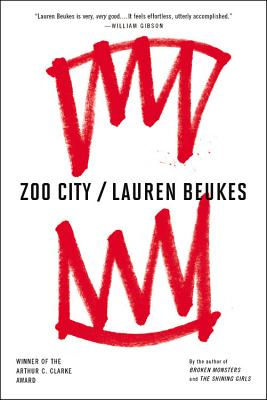
Zoo City (Lauren Beukes)
Title: Zoo City
Author: Lauren Beukes
Publisher: Jacana Media
Lauren Beukes’ Zoo City is a futuristic tale set in Johannesburg.
Protagonist Zinzi December is a former journalist-turned-freelancer who has to do everything she can do to survive the cut-throat Zoo City. The story takes place in a stripped-down and dirty (though horrifyingly realistic) portrayal of a dystopic future Jo’burg where violence, magic, and corruption take a main seat at the table.
Zoo City is an urban futuristic novel where magic mixed with gangsterism plays a strong role. One almost dares to think that Zoo City could have been set in the same time and place as Blomkamp’s Chappie. In fact, the story grabs your attention from the first page, and pulls you into the character’s personal conversations, banter, and anxieties. Zinzi has just the right amount of wit and sarcasm, which one assumes are necessary qualities to make it through the average day in Zoo City. Zinzi is soon hired to find missing singer (and presumably influencer) Songweza. Her client is the high-flying music producer Odi Huron, and soon the journey sends her even deeper into the underbelly of the beastly city.
You’ll appreciate many of the nuances in the story if you’ve ever been a freelancer, contractor, journalist (or made it out of the chaos you’d see in real-life Johannesburg during the height of a traffic jam). There’s something in the novel for everyone, especially readers who love a good mystery or cyberpunk tale.
Lauren Beukes has a wonderful knack for excitement and cliffhangers. You’re unsure where things will go from one chapter to the next, but consistently know that you’d like to find out.


Comments