African Graphic Novels: Gods and Superheroes

For #ReadingAfrica 2025, we have asked a few writers to write guest posts, recommending books from different genres. Feel free to join us over on social media for the weeklong celebration of African writing in all its forms.
By Alex J. Coyne
Graphic novels and comic books set and written in Africa have become more popular in the past decade or so. Older readers might remember a time when you had to commute towards the other end of town where they sold Mad Magazines or Batman just to see anything. Today, more illustrators and authors are bringing life to African stories and turning them into vibrant, thrilling graphic novels.
There’s a lot more to discover in the African-set graphic novel multiverse than Wakanda. Stories like Aya de Yopougon, Kariba, and Kwezi have introduced new heroes and heroines that fans on the African continent can identify and resonate with.
In translation, there’s also much to discover. For example, the popular Belgian comic strip Boykie by Pieter de Poortere (Dickie in English, or Boerke in Belgian) has been brought to life by carefully translating its signage and background gags.
Graphic novels, comic books, and comic strips are universally understood forms of art; Africa is a particularly picturesque place with its own fascinating mythologies (and yes, humour). Authors and illustrators are bringing these stories to the page and giving the world much to discover.
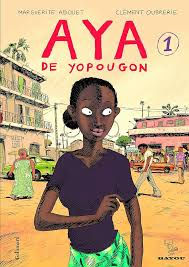
Aya de Yopougon (Marguerite Abouet)
Title: Aya de Yopougon Author: Marguerite Abouet
Publisher: Drawn & Quarterly (English)
Aya de Yopougon is the first in a series of six graphic novels that follows main character Aya – the eponymous heroine who is nineteen at the start of the series.
Originally published in French, the title translates to “Aya of Yop City,” and the series was written by Marguerite Abouet and illustrated by Clément Oubrerie.
The Aya-series of graphic novels contains classic scenes from the Ivory Coast – and it’s historically placed between the 1970s and 1980s that add to a nostalgic feel for some readers who recognize the setting.
The series is quick to show that not every portrayal of the African continent has to be a dystopic one. Meeting Aya also does away with the idea that all graphic novels need superpowers or dramatic battles to be exciting.
Instead, Aya de Yopougon is about cultural and moral challenges, ones which are usually solved by Aya. Like any good graphic novel hero(ine), they take care of their friends.
The first tale in the graphic novel series was turned into a 2013 film.
Aya is a beloved character with a story wrapped up in wonderful illustrations and, for some, nostalgia of growing up on the Ivory Coast; if you’ve never been to the area or know almost nothing about it, Aya of Yop City is a worthy illustrated tour.

Kariba (Daniel & James Clarke and Dan Snaddon)
Title: Kariba
Author: Daniel & James Clarke and Dan Snaddon
Publisher: Catalyst Press
Kariba is described as being the story of “Zambezi River and the history of the Kariba Dam.”
If you’ve never thought about it before, you’ll suddenly realize that this makes one of the most interesting and original premises for a graphic novel. While its plot isn’t purely historical, there are many real-life elements and historical factoids scattered through the story.
If you’ve ever stood at the edge of a dam, you might realize the sheer thundering power of water. Then the magical, somewhat mystical premise of Kariba begins to make perfect sense.
The story tails protagonist Siku who finds that the water responds to her feelings and thoughts. At its core, it becomes a story of connecting with nature. The fact that you might learn something historical from the story feels secondary to a good plot.
The title comes from the Shona word Kariba, which means whirlpool or trap, and traces its origins back to local legends of majestic water Gods. The graphic novel relies heavily on the story of the Kariba Dam’s origin, though intersects it heavily with the mythology behind it.
Beautifully illustrated, Kariba is both a tribute to nature and a story of journey and triumph: basically, everything you’d expect from a graphic novel except for capes and laser beams.

Kwezi (Loyiso Mkize)
Title: Kwezi
Author: Loyiso Mkize
Publisher: New Africa Books (David Philip Publishers)
Loyiso Mkize’s Kwezi brings graphic novels back to the core idea of superheroes and superhuman abilities. If you’re looking for a superhero that comes straight-outta-Johannesburg, then you don’t have to look any further than this. It’s also filled with tributes to the South African landscape and setting.
Characters live in the fictional and futuristic Gold City.I Instead of a dystopic wasteland equivalent to Gotham City, the future Gold City prospers.
The story is a powerful coming-of-age tale, and gets everything right that you’d want to see in a superhero story. Kwezi has classic superhero elements like his origin story (being born with his powers through his family lineage), and his role as the antihero (at first using his powers for personal gain, and only later learning how to use them responsibly).
Through the story, Kwezi realizes he has powers like superior strength and flight, and then starts his his Major Arcana-like journey through discovering himself and where he comes from.
In its second issue, Kwezi returns to his roots in Langelihle, Eastern Cape.
At first, and like many new superheroes might, Kwezi uses his abilities only for personal gain. Though, he soon changes his attitude when he realizes that he’s not the only person out there with similar abilities.
The book doesn’t use this famous Spider-Man line, but it could easily have said, “With great power comes great responsibility.”
Studies have hailed Kwezi as part of “a new black pantheon” of superheroes – ones that transcend cultural barriers without losing elements of its uniquely African culture.
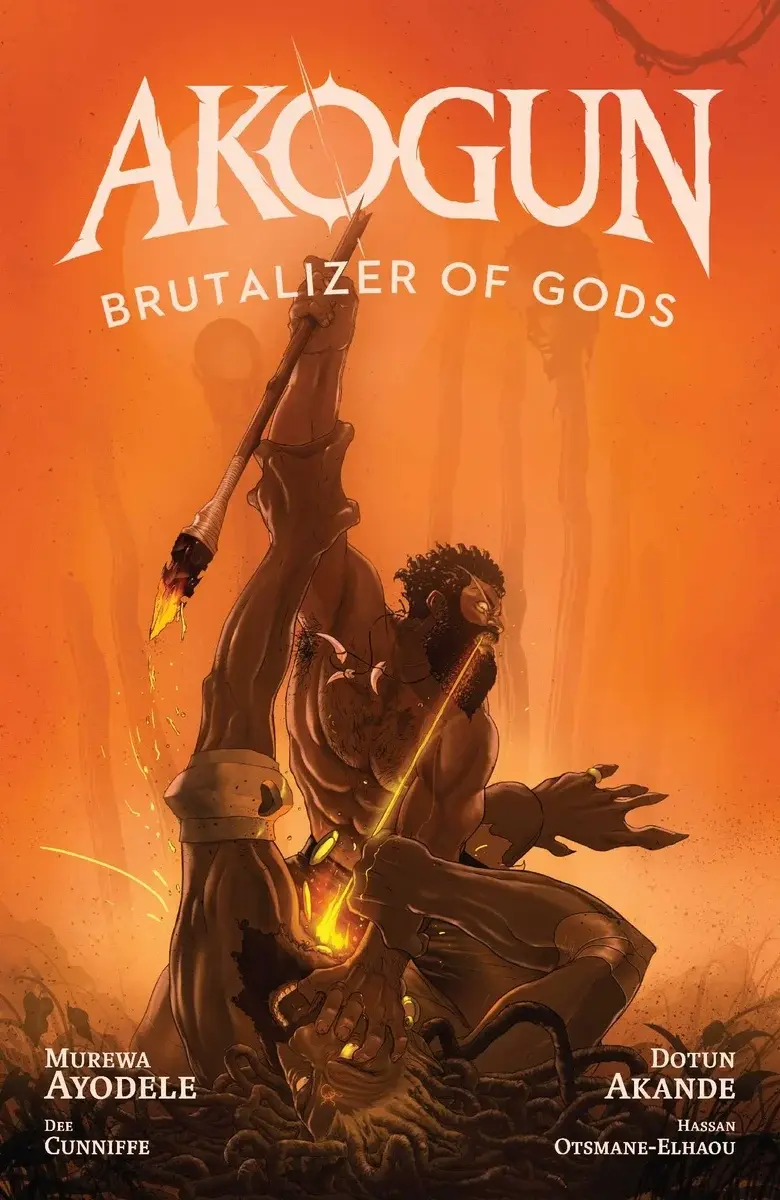
Akogun: Brutalizer of the Gods (Murewa Ayodele and Dotun Akande)
Title: Akogun: Brutalizer of the Gods
Author: Murewa Ayodele and Dotun Akande
Publisher: Oni Press
Akogun: Brutalizer of the Gods brings together Ayodele (comic book author whose credits include Rogue Storm, Storm, and New Men) and Akande who has a career history that includes Marvel (Iron Man, Moon Knight).
This is almost the polar opposite to Aya de Yopougon: Akogun is readied for battle, and sets out on a quest to bring down the fallen gods. Specifically, Akogun is faced with Ogun – one of the traditionally African gods, though transposed into a graphic novel character for the purposes of this story.
There’s something about Akogun that feels like a mythological epic; like stories of Herculean mythology skyrocketed into an African setting. This is what you hoped you would find amongst various Mad Magazines and other comic books years ago: heroes that share your origin story or place, at least a little.
If you want a vibrant story filled with action from the first panel, Akogun deserves a place in your collection: it’s full of heroic battles and majestic scenes.
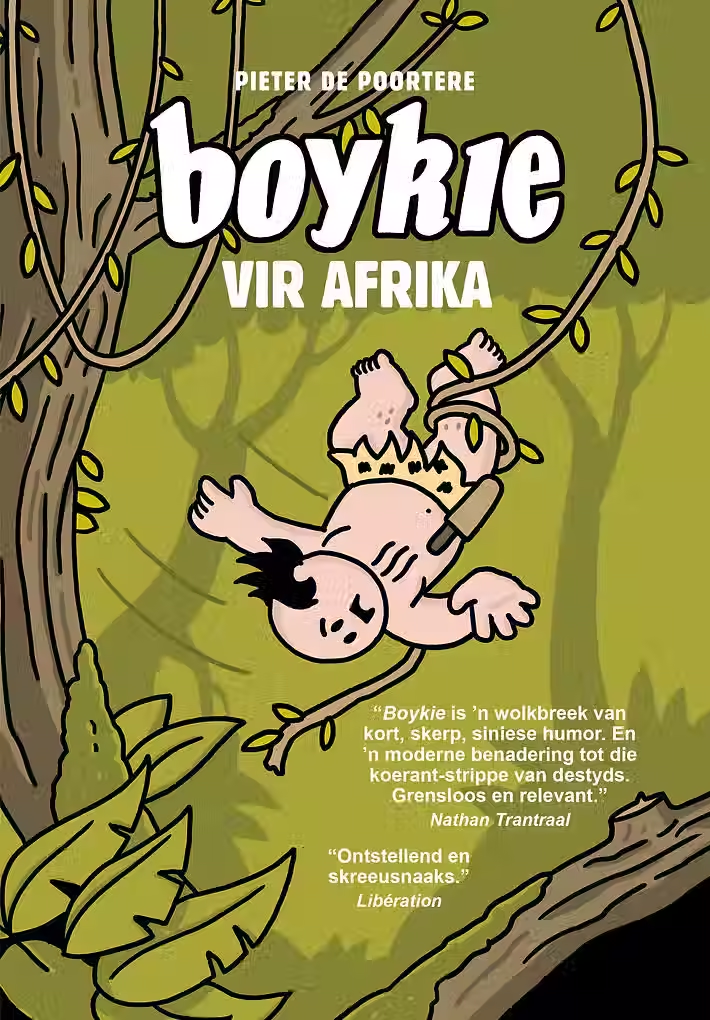
Boykie
Title: Boykie
Author: Pieter de Poortere
Publisher: Flare Books [Catalyst Press]
Boykie isn’t a graphic novel set within Africa, though it has been recently translated from its Belgian and English counterpart comic strip into Afrikaans. The comic strip contains no dialogue or speech bubbles, instead it relies on visual humour with some of its elements and puns (like signs) appropriately translated.
Visual, often slapstick humour is universally funny. Mr. Bean had almost no spoken lines, but also gained many international fans for this very reason. Comic strips like “Spy vs. Spy” and Otto Soglow’s “The Little King” contain no speech bubbles, and yet readers still understand the jokes perfectly fine.
Some stories like Aya de Yopougon were originally translated into English from French. Yet in translation, the story still works. This can be made easier when you’re translating dialogue and titles, but becomes much more difficult when the comic strip or graphic novel contains zero dialogue whatsoever. Instead the jokes are visual gags, and what needs to be translated is signage and often puns that must be carefully considered.
Boykie translates the Boerke-series by Belgian artist Pieter de Poortere, which might be familiar to some English readers as the equivalent Dickie.
Boykie/Boerke/Dickie consists mostly of particularly dark panel-gags. Panels contain zero dialogue, and instead rely on visual humour to make its point.
If you remember “Spy vs. Spy” from Mad Magazine, then you might have a quick grasp of Boykie and why the series works, and also why it becomes difficult to translate. Since Boykie contains no dialogue, its success relies on the clever, careful translation of subtle elements like signs. As the review by Izak de Vries points out, comparing it to the controversial satirical Afrikaans Bittercomix: it’s deliberately in bad taste, and much of it consists of gallows humour.
Boykie is meant to be dark and thought-provoking, even though illustrations would suggest something more light-hearted. Many of its jokes are all about timing, misunderstanding, or walking away before the disaster hits.
One frame shows a circus clown entering a hospital ward, ... And then unplugging someone’s “helium” (or rather oxygen supply) – and subsequently walking out of the room to miss the ensuing chaos the reader is shown next.
Dark humour and total chaos, Boykie could easily be a strong rival that reminds of Cyanide and Happiness.


Comments