Stories of Ghosts, Gods and Ghouls: The Best of African Gothic Novels

For #ReadingAfrica 2025, we have asked a few writers to write guest posts, recommending books from different genres. Feel free to join us over on social media for the weeklong celebration of African writing in all its forms.
By Alex J. Coyne
Gothic stories are defined by their elements, and you will always know a truly gothic story when you’ve seen one even if you cannot name these elements with your cold, dark heart.
Gothic stories are ones that might be set in any place and time, though the stories categorically called gothic will usually contain a rabbit hole of references to elements of night-time, darkness, moonlight, and monsters or spectres or spirits.
Author Eudora Welty is familiar to some for writing some of the most famous Southern Gothic tales. Frankenstein is one of the defining gothic stories and one of the first people think to mention. But have you ever wondered how well Gothic stories would work within Africa?
Africa is a place with many mythologies, spirits, and monsters – and they fit well to form their own genre: purely African Gothic stories.
African Gothic tales have brought the occult and unknown elements of thrilling fiction to the continent – and not by simply transposing the genre’s tropes to another setting, but by finding Gothic elements that emerge directly from within Africa as a cultural mixing pot and as a physical place.
Here’s what to read if you want to explore the depths of the psyche through African Gothic tales, and which authors you should pay attention to.

The Creation of Half-Broken People (Siphiwe Gloria Ndlovu)
Title: The Creation of Half-Broken People
Author: Siphiwe Gloria Ndlovu
Publisher: Anansi International [House of Anansi]
The Creation of Half-Broken People won the Yale University's Windham-Campbell Prize for outstanding fiction – and it’s not difficult to see why this book might do for African Gothic Fiction what the original Dracula did for goths.
The story essentially explores the innate human urge to trace our roots. At some point we all want to know where we come from – and at some point, our ancestral spirits will speak up and either afford us with comfort or leave us with more questions.
The Creation of Half-Broken People follows an unnamed protagonist who is plagued by visions. Of course, these visions push her to further explore where they come from – which leads directly to her own path of personal discovery.
As the story itself describes the experience, the plot begins “when I got the job at the Good Museum, when I moved into the attic of the Good House, when I birthed the Three Good Children.”
For context, the Good Foundation is what the character is referring to: a societal powerhouse run by the literal Good Family that governs all.
In a surprising twist, the Foundation (which one must remind oneself is fictional even though it seems possible) traces its roots back to the to descendants of Captain John Good – or King Solomon’s mines. Africa has always been a focal point for charitable causes, though often charitable attempts are overshadowed by crime, bureaucracy, and/or corruption.
The Creation of Half-Broken People is set in a whole different multiverse, though doesn’t remove itself from African context or pop culture.
As the story continues, the character begins to examine her purpose, and like A Clockwork Orange, questions why society does what it does.

When the Village Sleeps (Sindiwe Magona)
Title: When the Village Sleeps
Author: Sindiwe Magona
Publisher: Picador Africa [Pan Macmillan]
When the Village Sleeps takes its title from the familiar proverb, the one saying that it takes a village to raise a child. What happens when the village sleeps and turns a blind eye?
The story is intrinsically dark and Gothic, though set in the village of KwaNele. There’s a strong contrast between what life is like in the rural village and what it’s like compared to city life. Everything one may take for granted in the city, from running water to electricity supply, changes between worlds.
When the Village Sleeps is social commentary first, and supernaturally Gothic second.
Beyond the story’s ghosts and ancestral spirits, you’ll find a strong voice that talks about issues like poverty and teenage pregnancy. For example, When the Village Sleeps is candid about social issues like whether child support grants are used as financial incentives in poor circumstances.[1] Busi, a young girl, gives birth to Mandlakazi in the hopes of getting financial gain through a child support grant. Soon the voices of The Old – ancestral, ancient voices – begin to speak and guide Busi on her path forward.
It’s a story driven by multiple generations who are all trying to find their place in their own way.
The book is an older coming-of-age story that uses fictional settings and spirits to explore situations and stories that are real-life for many people. Once you look past the story’s Gothic themes and ghosts, what you have is still a story about humanness and struggle in Africa.
When the Village Sleeps soon becomes a fantastical tale of ancestral tributes given a modern setting. The novel manages to play on well-established Gothic themes in its uniquely African setting without turning itself into a horror novel.
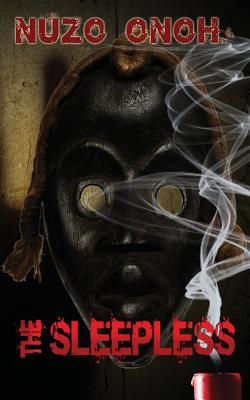
The Sleepless (Nuzo Onoh)
Title: The Sleepless
Author: Nuzo Onoh
Publisher: Canaan-Star Publishing
The Sleepless is purely Gothic horror set in in Nigeria during the real-life Biafran War.
If you’re looking for a book that might keep you up at night, then The Sleepless should be your next read. The whole book manages to convey an eerie vibe that’s going to stay with you during quiet moments for a while.
“The Sleepless” refers to a song that’s sung by the ghosts of children – a true show of the book’s creepy and unsettling tone.
The book plays on superstition and fear, but the story also transcends its genre: it tells a story about the true horrors of war and its impact – the further tale that’s told through the spirits of those who have been forced to move on.
Obelé, whom the book describes as a young girl with psychic abilities, hears a mysterious voice that gives her warnings and messages from the beyond. Along with this, she hears the children singing their ghastly song – and the author deservingly claims her title of being called “The Horror Queen of Africa.”
The Sleepless is a certain classic Gothic ghost tale told with classic African elements, and also serves as a strong commentary on the Nigerian Civil War (1967 to 1970) and the lasting effects that it has had.
The story proves, and well, that a story doesn’t have to fit into the category of historical fiction to teach you something about the past.

Cursed Daughters (Oyinkan Braithwaite)
Title: Cursed Daughters
Author: Oyinkan Braithwaite
Publisher: Doubleday
Cursed Daughters is a Gothic horror story set in Lagos, Nigeria, and is written by the same author as the acclaimed book My Sister, The Serial Killer.
Oyinkan Braithwaite manages to convey a traditionally Gothic story with an eerie and uncanny air, though also includes elements of wit and humour – wanting to remind the reader of classic slasher villains like Freddy Krueger that made fear somewhat fun.
Cursed Daughters doesn’t go for horror or jump scares, but instead plays on the idea of reincarnation and tradition.
The curse in question belongs to Eniiyi and her family, a girl believed to be the reincarnation of her deceased cousin due to their uncanny resemblance from birth. Love is impossible for the bloodline to find, and any attempts to do so are met with cruel, odd, sometimes funny twists of fate.
As the plot unfolds, Eniiyi attempts to shake off and/or cure her family curse while carving out her own destiny away from her family’s legacy. Spiritual ideas like reincarnation are well-combined with family ties, identity crises’ and straight-out funniness.


Comments